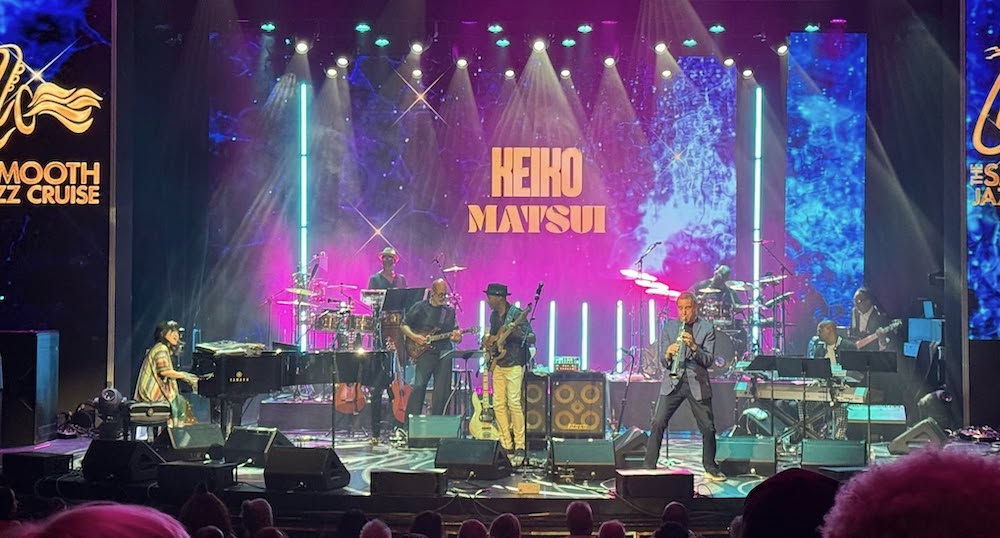
Keiko
Matsui - The Smooth
Jazz Sensation Keiko
Matsui is an
internationally acclaimed
Japanese contemporary jazz
and world music pianist,
keyboardist, and composer.
Fusing Eastern melodies
with Western jazz grooves
and New Age textures, she
has released nearly thirty
albums, achieved Billboard
chart dominance, and
dedicated her global
platform to humanitarian
and environmental causes.
Early
Life and Musical
Awakening
Born Keiko Doi on July 26,
1961, in Tokyo, Japan,
Matsui was surrounded by
artistic expression from
an early age; her mother
taught traditional
Japanese dance. She began
taking formal classical
piano lessons at age five.
As she progressed through
her education, her
curiosity expanded beyond
the classical canon.
During junior high school,
she began writing her own
original compositions and
fell under the spell of
American jazz fusion and
eclectic sonic pioneers.
Artists like Chick Corea
and Stevie Wonder,
alongside classical giants
like Sergei Rachmaninov
and Jean Sibelius, helped
shape her expansive
musical palette. She also
drew inspiration from film
score composers like
Maurice Jarre and Nino
Rota, learning early on
how instrumental music
could function as a form
of visual and emotional
storytelling.
Despite her deep passion
for music, Matsui pursued
formal studies outside the
conservatory, attending
Japan Women's University
(Nihon Joshidaigaku),
where she earned a degree
in children's culture.
Concurrently, her
exceptional talent caught
the attention of the
prestigious Yamaha Music
Foundation, where she
refined her craft,
recorded promotional
material, and even penned
her first major film score
as a teenager.
The
Formation of Cosmos
and Solo Launch
During her college years,
Matsui became a founding
member of Cosmos, a
popular Japanese new-age
and synthesizer-focused
instrumental band. With
Cosmos, she recorded four
successful albums, gaining
invaluable studio
experience and learning
how to blend electronic
keyboard elements with
acoustic textures.
It was also during her
time at Yamaha that she
met her future husband and
musical collaborator,
producer and shakuhachi
flute player Kazu Matsui.
The couple married and
pooled their honeymoon
money to finance Keiko’s
solo debut recording
project in the United
States. Released in 1987,
that seminal album, A Drop
of Water, introduced
American audiences to her
delicate yet evocative
compositional voice. The
album immediately struck a
chord, landing on
Billboard’s Top
Contemporary Jazz Albums
chart.
Chart
Success and Global
Fusion
Building upon her debut,
Matsui signed with MCA
Records and released a
string of acclaimed
late-80s and early-90s
recordings, including
Under Northern Lights
(1989) and No Borders
(1990). Her music steadily
defied easy
categorization, bridging
the gap between smooth
jazz, pop, and global folk
traditions.
Her breakthrough arrived
with the 1995 release of
Sapphire, which climbed to
the number-one spot on the
Billboard Contemporary
Jazz chart. Follow-up
records like Dream Walk
(1996) stayed on the
charts for well over a
year, cementing her
reputation as a major
commercial and artistic
force in instrumental
music.
In 2001, Matsui shattered
barriers with her album
Deep Blue, which made
history as the first
record by a Japanese
artist to claim the
number-one spot on
Billboard’s jazz album
chart for multiple
consecutive weeks. Further
masterpieces like The Ring
(2002), Wildflower (2004),
and Moyo (2007) expanded
her footprint,
incorporating orchestral
arrangements, African
rhythms, and deep
spiritual reflections on
nature.
Collaborations
and Later Career
Matsui’s commanding yet
gracious stage presence
has led to collaborations
with legendary artists.
She has shared stages or
recorded with jazz icons
like Miles Davis, Stevie
Wonder, Hugh Masekela, and
contemporary pianist Bob
James, with whom she
recorded the brilliant
four-hand piano album
Altair & Vega in 2011.
Her later albums,
including The Road...
(2011), Journey to the
Heart (2016), Echo (2019),
and Euphoria (2023),
showcase a continuously
evolving artist who
refuses to stagnate.
Whether performing at the
Blue Note in New York,
headlining major
international jazz
festivals, or performing
for global audiences,
Matsui maintains a
profound animistic respect
for her instrument,
famously bowing to her
piano at the end of every
rehearsal and performance.
Humanitarian
and Philanthropic
Essential to Matsui’s
identity as an artist is
her commitment to social
causes. Viewing music as a
universal language that
heals cultural and
religious divides, she has
consistently leveraged her
albums and tours to
support global charities.
She has dedicated proceeds
and royalties to the
United Nations World Food
Programme, the National
Marrow Donor Program, and
breast cancer awareness
initiatives, proving that
her life’s work extends
far beyond the concert
hall.
Video (above): Keiko
Matsui performs "Light
Above the Trees"